

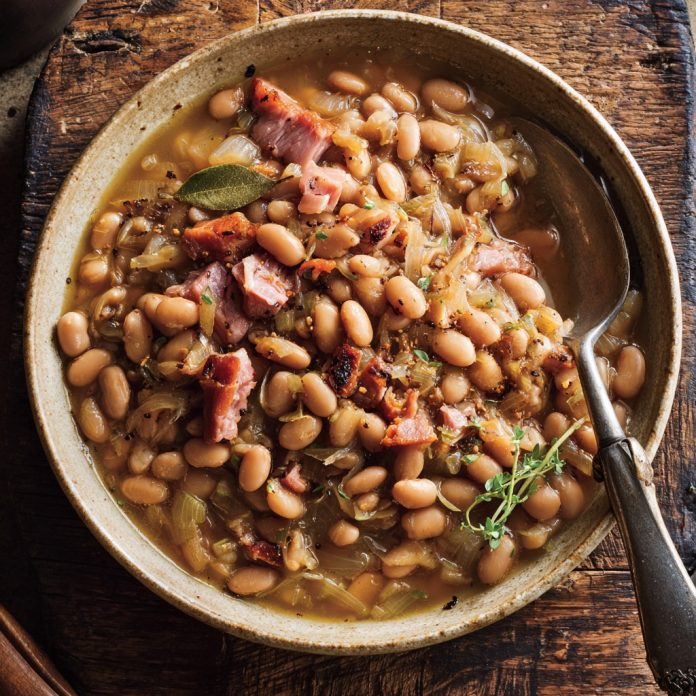

Southern Ham and Brown Beans is the very soul of rustic, nourishing comfort food—a humble dish that, through patience and simplicity, achieves a depth of flavor and satisfaction that belies its modest ingredients. This recipe is a testament to the magic of slow cooking, where dried pinto beans transform from hard, earthy pellets into creamy, tender morsels, all while absorbing the rich, smoky essence of a ham hock or bone. The process begins with a ceremonial soak, an act of preparation that rehydrates the beans and ensures even cooking. Simmered for hours with nothing more than chopped onion, garlic, a bay leaf, and the precious ham bone, the pot develops a complex, savory broth that is both light and profoundly meaty. The smoked paprika, while optional, is a whisper of genius, echoing the smokiness of the ham and adding a layer of warmth that ties the entire pot together.
The brilliance of this dish lies in its elegant economy and the profound connection it fosters to traditional, home-cooked meals. It is a recipe of transformation, where water, beans, and a bony piece of ham evolve into a hearty, complete meal that nourishes both body and spirit. The final act of shredding the tender ham from the bone and stirring it back into the pot is a reward for the wait, distributing salty, savory nuggets throughout. Served steaming in a bowl, perhaps with a crumble of cornbread stirred right in, it is a meal that offers grounding, warmth, and a deep sense of contentment. It’s a dish that teaches patience, celebrates resourcefulness, and delivers a timeless, soul-satisfying bowl of pure comfort that feels like a welcome embrace.
Why You’ll Love This Recipe:
- Deep, Soul-Satisfying Comfort: Offers the ultimate in hearty, warming, and nostalgic flavor that feels like a hug in a bowl.
- Incredibly Economical & Resourceful: Transforms an inexpensive bag of beans and a leftover ham bone into a magnificent, generous meal.
- Effortless, Hands-Off Cooking: Whether simmered on the stovetop or left in a slow cooker, the pot does all the work, filling your home with a heavenly aroma.
- Perfect Make-Ahead Meal: Tastes even better the next day as the flavors continue to meld, making it ideal for meal prep or easy leftovers.
- Nourishing & Wholesome: Packed with protein, fiber, and nutrients from simple, whole ingredients.
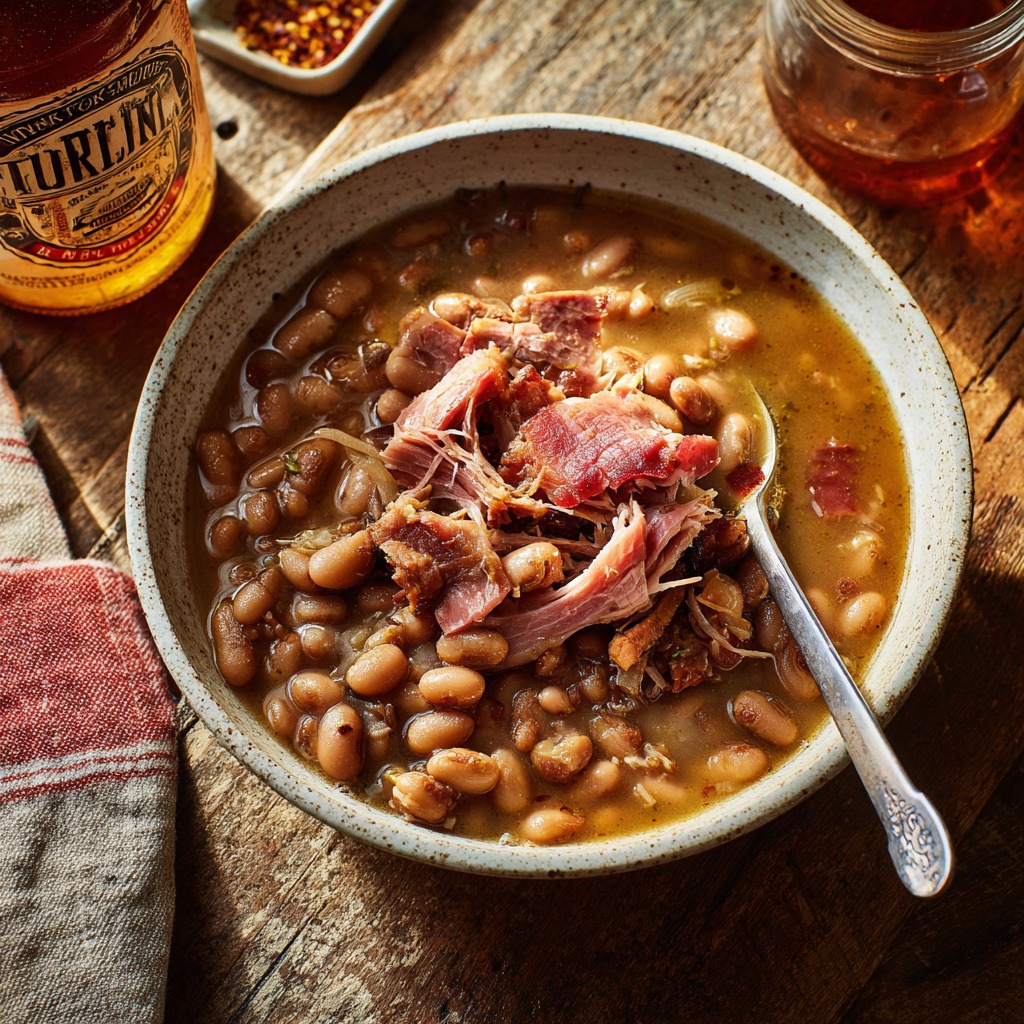
Ingredients:
For the Beans & Broth:
1 pound (about 2 ¼ cups) dried pinto beans or “brown beans,” rinsed and sorted
8 cups (2 quarts) cold water, plus more as needed
1 – 1 ½ pounds meaty ham hock, ham bone, or 2 cups diced leftover ham
For the Aromatics & Seasoning:
1 medium yellow onion, chopped
2 cloves garlic, minced
1 teaspoon kosher salt, plus more to taste
½ teaspoon freshly ground black pepper
½ teaspoon smoked paprika (highly recommended)
1 dried bay leaf
Instructions:
Step 1: Soak the Beans (Choose Your Method)
Overnight Soak: Place the rinsed beans in a large bowl or pot. Cover with at least 3 inches of cold water. Let soak at room temperature for 8-12 hours. Drain and rinse before cooking.
Quick Soak: In a large pot, combine the rinsed beans and enough water to cover by 2 inches. Bring to a rapid boil for 2 minutes. Remove from heat, cover, and let stand for 1 hour. Drain and rinse.
Step 2: Combine and Cook
In a large Dutch oven or heavy-bottomed pot, add the soaked (or unsoaked) beans, 8 cups of fresh cold water, the ham hock or bone, chopped onion, minced garlic, salt, pepper, smoked paprika, and bay leaf.
Step 3: Simmer to Tenderness
Stovetop Method: Bring the pot to a boil over high heat. Immediately reduce the heat to low, maintaining the gentlest possible simmer. Cover partially with a lid. Cook for 2 to 3 hours, stirring occasionally and checking that the beans remain submerged (add hot water as needed). The beans are done when they are completely tender and creamy inside.
Slow Cooker Method: Transfer everything to a 6-quart slow cooker. Cook on LOW for 7-8 hours or on HIGH for 4-5 hours, until beans are tender.
Step 4: Finish the Dish
Once the beans are tender, carefully remove the ham hock or bone and place it on a cutting board to cool slightly. Discard the bay leaf. If using a bone, shred all the meat from it using two forks. Return the shredded meat to the pot. If using diced leftover ham, simply stir it in now to warm through.
Step 5: Adjust and Serve
Taste the broth and beans. Adjust the seasoning with additional salt and pepper as needed. For a thicker broth, you can mash a small portion of the beans against the side of the pot with a spoon and stir. Ladle the hot beans and broth into deep bowls.
Tips:
- Don’t Add Salt Too Early: If using an unsoaked “quick cook” method, wait to add salt until the beans are beginning to soften to avoid toughening the skins.
- The Ham is Key: A smoked ham hock or bone from a baked ham provides incomparable flavor. For a lighter version, use a smoked turkey leg or wing.
- Low and Slow Simmer: A true, gentle simmer is crucial. A rolling boil will cause the beans to break apart and the broth to become cloudy.
- Thickness Preference: The broth will naturally thicken as it cools. For an even thicker, creamier consistency, use a potato masher to lightly mash some of the beans right in the pot before serving.
- Acidic Ingredients: Avoid adding tomatoes, vinegar, or other acids until the beans are fully tender, as they can prevent the beans from softening.
Storage Options:
- Refrigerator: Cool completely and store in an airtight container in the refrigerator for up to 5 days. The flavors improve dramatically.
- Reheating: Reheat gently on the stovetop over medium-low heat, adding a splash of water if the beans have thickened too much. They can also be reheated in the microwave.
- Freezing: This soup freezes exceptionally well for up to 3 months. Portion into freezer-safe containers, leaving room for expansion. Thaw overnight in the refrigerator before reheating.
- Meal Prep: This is the ultimate make-ahead meal. Make a large batch on the weekend for easy, comforting lunches and dinners all week.
Southern Ham and Brown Beans is more than a recipe; it is a tradition—a slow-simmered pot of sustenance, history, and heart. It’s a dish that asks for little, gives much, and remains one of the most truly comforting meals you will ever make.