

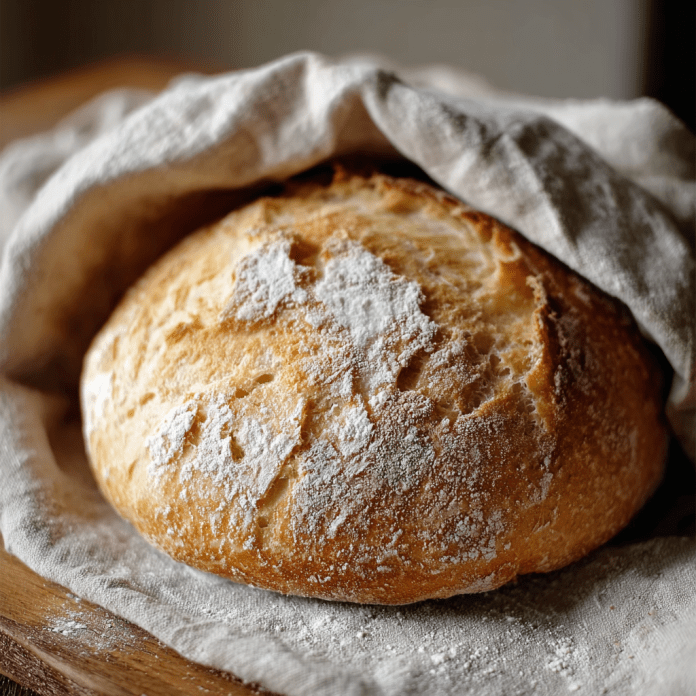

Simple Dough Bread is the foundational recipe every home baker needs—a foolproof, endlessly versatile loaf that proves you don’t need a bread machine or professional training to fill your kitchen with the warm, intoxicating aroma of freshly baked bread. This recipe strips bread-making down to its purest essence: flour, water, yeast, and salt, coming together through a few simple steps to create a loaf with a beautifully crisp, golden crust and a soft, airy interior. The magic begins with activating the yeast in warm water with a touch of sugar, creating a foamy proof that guarantees your bread will rise. From there, a few minutes of kneading transforms the shaggy dough into a smooth, elastic ball that, given time and warmth, will double in size and develop that unmistakable, complex bread flavor.
The brilliance of this recipe lies in its simplicity and the profound satisfaction it delivers. It is the perfect starting point for beginners and a reliable standby for experienced bakers, requiring no special equipment and only the most basic pantry staples. The optional olive oil adds a touch of tenderness to the crumb, while the two-rise method ensures a loaf with excellent structure and flavor. Whether shaped into a rustic round, baked in a loaf pan for perfect sandwiches, or divided into dinner rolls, this bread is a testament to the magic of flour, water, and patience. It is a recipe that invites you to slow down, get your hands in the dough, and experience the pure, simple joy of creating something nourishing and beautiful from scratch.
Why You’ll Love This Recipe:
- Incredibly Simple & Foolproof: Only 4-5 basic ingredients and straightforward steps for guaranteed success.
- Versatile Foundation: Use this dough for sandwich loaves, dinner rolls, pizza, focaccia, or breadsticks.
- No Special Equipment Needed: Just a bowl, your hands, and an oven.
- Deeply Satisfying Process: The act of kneading and watching your dough rise is incredibly rewarding.
- Fresh, Homemade Flavor: Nothing compares to the taste and aroma of bread fresh from your own oven.
Ingredients:
For the Dough:
3 cups (375g) all-purpose flour, plus more for dusting
1 cup (240ml) warm water (about 110°F / 43°C)
2¼ teaspoons (1 packet) active dry yeast
1½ teaspoons kosher salt
1 teaspoon sugar or honey (optional, helps activate yeast)
1 tablespoon olive oil (optional, for a softer texture)
Instructions:
Step 1: Activate the Yeast
In a large mixing bowl or the bowl of a stand mixer, combine the warm water and sugar (or honey). Stir gently to dissolve. Sprinkle the yeast evenly over the surface of the water. Let it sit undisturbed for 5-10 minutes until it becomes foamy and bubbly. This confirms your yeast is active and alive.
Step 2: Make the Dough
Add the flour, salt, and olive oil (if using) to the yeast mixture. Stir with a wooden spoon or dough whisk until a shaggy, rough dough forms and all the flour is incorporated.
Step 3: Knead the Dough
Turn the dough out onto a lightly floured surface. Knead for 8-10 minutes, pushing the dough away from you with the heel of your hand, then folding it back toward you. The dough is ready when it is smooth, elastic, and springs back when gently poked.
Step 4: First Rise
Lightly oil a clean bowl. Place the dough in the bowl, turning once to coat with oil. Cover the bowl tightly with plastic wrap or a clean kitchen towel. Let it rise in a warm, draft-free place for 1 to 1 ½ hours, or until doubled in size.
Step 5: Shape the Loaf
Punch down the dough gently to release the air. Turn it out onto a lightly floured surface. Shape it into a round loaf (boule) and place it on a parchment-lined baking sheet, or shape it into a log and place it in a greased 9×5-inch loaf pan.
Step 6: Second Rise
Cover the shaped loaf loosely with the kitchen towel. Let it rise for another 30-45 minutes, until puffy and nearly doubled. About 20 minutes before baking, preheat your oven to 375°F (190°C).
Step 7: Bake
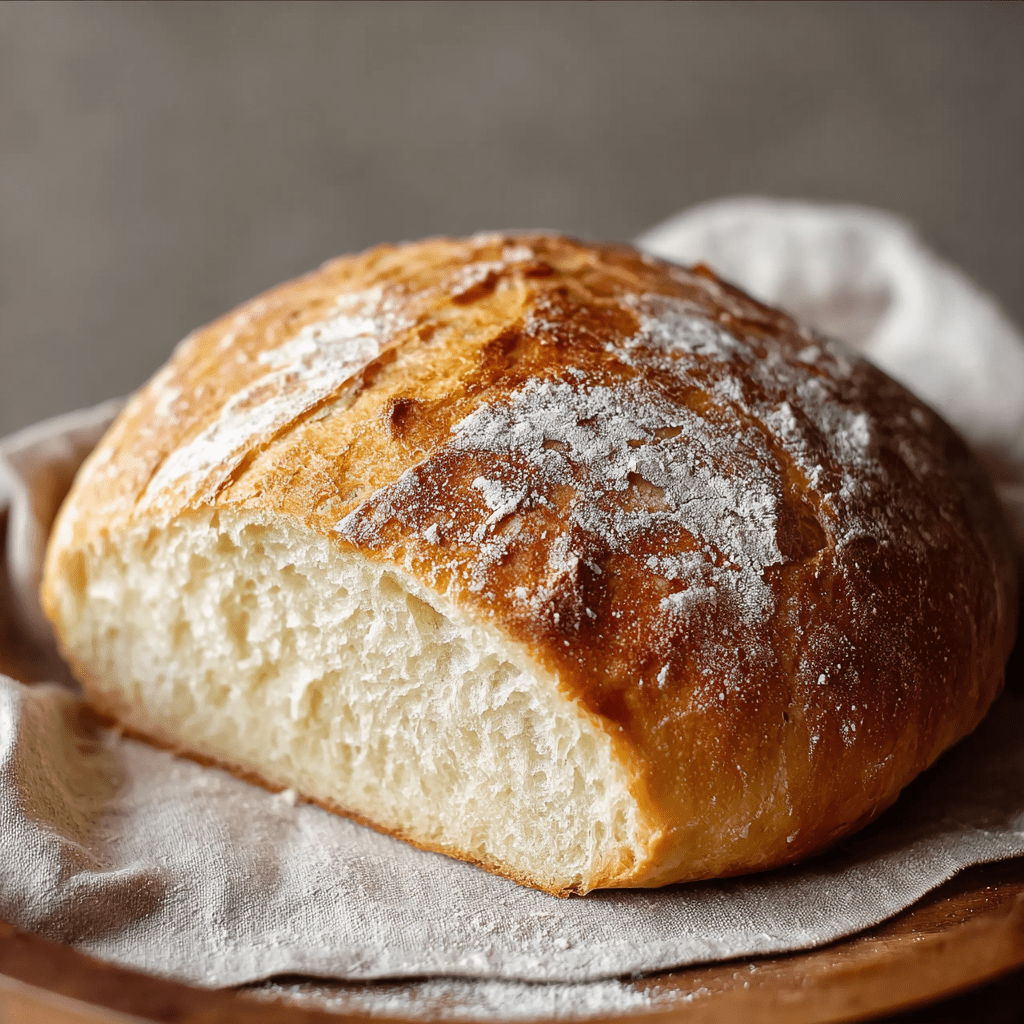
If baking a free-form loaf on a sheet, you can make a few shallow slashes on top with a sharp knife for a decorative touch. Bake for 30-35 minutes, until the crust is deep golden brown and the loaf sounds hollow when tapped on the bottom. An internal temperature of 190-200°F (88-93°C) indicates doneness.
Step 8: Cool and Enjoy
Transfer the baked bread to a wire rack and let it cool completely before slicing. This is crucial for the texture. Resist the urge to cut into it while warm!
Tips:
- Water Temperature is Key: Too hot will kill the yeast; too cool won’t activate it. Use a thermometer for best results.
- Kneading Time: Don’t rush the kneading. Proper gluten development is essential for a good rise and chewy texture.
- The “Windowpane” Test: To check if you’ve kneaded enough, stretch a small piece of dough. If it stretches thin enough to see light through without tearing, it’s ready.
- Warm Rising Spot: An oven with the light on, or a sunny spot on the counter, works perfectly for rising.
- Customize It: Add herbs, garlic, cheese, or seeds to the dough for endless flavor variations.
Storage Options:
- Room Temperature: Store cooled bread in a paper bag or bread box at room temperature for up to 3 days. Avoid plastic bags, which make the crust soft.
- Freezing: Wrap the completely cooled loaf tightly in plastic wrap and then foil. Freeze for up to 3 months. Thaw at room temperature and reheat in a 350°F oven for 10 minutes to refresh the crust.
- Make-Ahead: You can prepare the dough through the first rise, then punch it down, cover tightly, and refrigerate for up to 24 hours. Shape and proceed with the second rise when ready.
Simple Dough Bread is more than a recipe; it’s an invitation. It invites you to slow down, connect with a timeless tradition, and experience the profound satisfaction of creating something truly nourishing with your own two hands. It’s the beginning of a beautiful baking journey.