

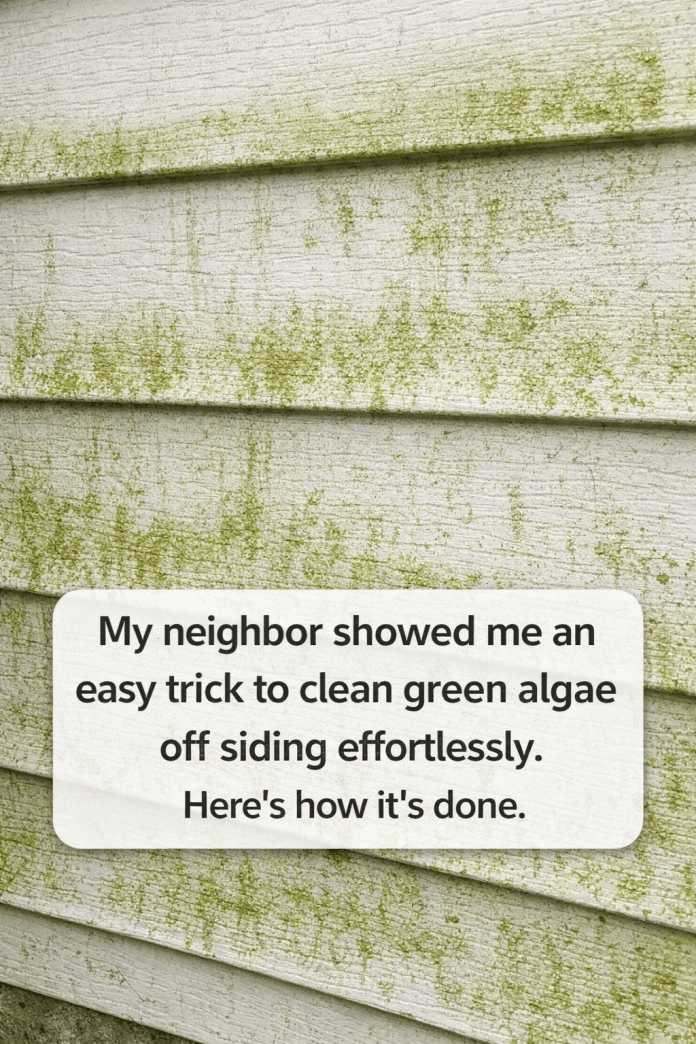

Green algae on siding is one of those things that sneaks up on you. One minute your house looks fine. The next, there’s a faint green tinge on the north side that slowly turns into something that makes you cringe every time you pull into the driveway.
For years, I tried everything. Pressure washing, store-bought cleaners, scrubbing until my arms ached. Nothing really worked without a whole lot of effort.
Then one day, my neighbor—the one with the perpetually clean house—shared a trick that changed everything. It was almost embarrassingly simple. No scrubbing, no expensive equipment, barely any work at all. I was skeptical. But after trying it myself? I haven’t cleaned siding any other way since.
Here’s how it works.
1. The Surprising No-Scrub Trick My Neighbor Shared
The trick came down to a simple mixture of common household products. No harsh chemicals, no scrubbing brushes, no climbing up and down ladders for hours.
My neighbor told me to grab a garden sprayer—the kind you use for fertilizer or weed killer—fill it with a specific solution, and just spray it onto the siding. That’s it. No scrubbing. No pressure washer. Just spray, wait, and rinse.
I honestly didn’t believe it would work until I saw the green patches practically melt away on their own.
2. Why Green Algae Loves Vinyl and Painted Siding
Algae thrives in damp, shady spots. That’s why the north side of a house or the areas under trees always seem to get hit first. Vinyl and painted siding, in particular, can trap moisture longer than other materials, giving algae exactly what it needs to settle in and spread.
The algae feeds off that moisture and whatever organic matter is on the siding, slowly creeping across the surface until what started as a faint shadow turns into a full green patch. Understanding that moisture is the main culprit makes it easier to see why this simple cleaning trick works.
3. The Simple Cleaning Cocktail: What You Actually Need
The mixture itself is surprisingly straightforward. You probably already have everything in your kitchen or laundry room.
All you need is:
- Water
- White vinegar
- A little dish soap
That’s it. No specialized cleaners, no bleach, no complicated formulas.
4. Exact Mixing Ratios So You Don’t Damage Your Siding
Getting the ratios right matters—not because it’s tricky, but because you don’t want anything too harsh sitting on your siding.
The sweet spot is:
- 1 gallon of water
- 1 cup of white vinegar
- 1 tablespoon of dish soap
Mix it together, pour it into your garden sprayer, and you’re ready to go. If you’re worried about delicate paint, test a small spot first. But for most standard siding, this ratio is gentle enough to be safe and strong enough to actually work.
5. How to Apply the Solution Without Ladders or Scrubbing
This is the part that feels almost too easy. Using your garden sprayer, spray the solution directly onto the algae-covered areas. Start from the bottom and work your way up so the solution doesn’t drip down over dry patches.
The beauty of this method is that the sprayer gives you plenty of reach. No ladder required. No balancing acts. Just stand on the ground and spray.
6. The ‘Let It Sit’ Step That Does All the Hard Work
This step requires the most patience—and the least effort.
Once you’ve sprayed the siding, walk away. Let it sit for at least 20 to 30 minutes. The vinegar and soap mixture needs time to break down the algae’s hold on the surface.
If the algae growth is heavy, you can leave it for up to an hour. The longer it sits, the more it loosens. This is where the real “no scrubbing” magic happens.
7. Rinsing It All Away: When the Algae Practically Falls Off
After the waiting period, take your garden hose—not a pressure washer, just a regular hose with a spray nozzle—and rinse the siding from the top down.
The algae should come off with barely any effort. It’s oddly satisfying to watch. Most of it will rinse away on the first pass. Stubborn spots might need a second spray and wait, but in most cases, one treatment does the job.
8. Safety Rules: Protecting Plants, Pets, and Your Paint
Vinegar and dish soap are mild, but it’s still smart to take basic precautions.
Before you spray, wet down any plants or bushes near the foundation so they absorb less of the solution. Keep pets and kids away from the area until everything has been rinsed and dried.
If your siding has older or delicate paint, test a small hidden patch first. That way you know exactly how it will react before you cover the whole side of the house.
9. How Long the Results Last and When to Repeat the Trick
In most cases, a single treatment keeps the siding clean for six months to a year. If your house is heavily shaded or you live in a humid area, the algae may come back sooner.
Checking your siding once or twice a year and hitting it with this spray when you first notice any green coming back makes it easy to stay ahead of it. A quick pass takes less time than letting it build up again.
10. Easy Preventive Habits to Keep Algae from Coming Back
A few small habits can make this cleaning job less frequent.
- Trim back trees or bushes that keep your siding shaded and damp.
- Make sure gutters and downspouts are directing water away from the house.
- Give your siding a quick rinse with a mild detergent and water now and then to remove the dirt and organic matter that algae feeds on.
None of this takes much time, but together they make a noticeable difference.
11. When This Hack Isn’t Enough and What to Try Next
This method works well for normal algae buildup. But if the growth has been there for years or the siding has never been cleaned, you might need something stronger.
If the vinegar solution doesn’t get it all after a couple of tries, a commercial siding cleaner may be the next step. In extreme cases, professional power washing can help—but that should be a last resort. Too much pressure can damage siding, especially if it’s older.
For most homeowners, though? This simple neighborly trick is more than enough to keep things looking fresh without the headache.