

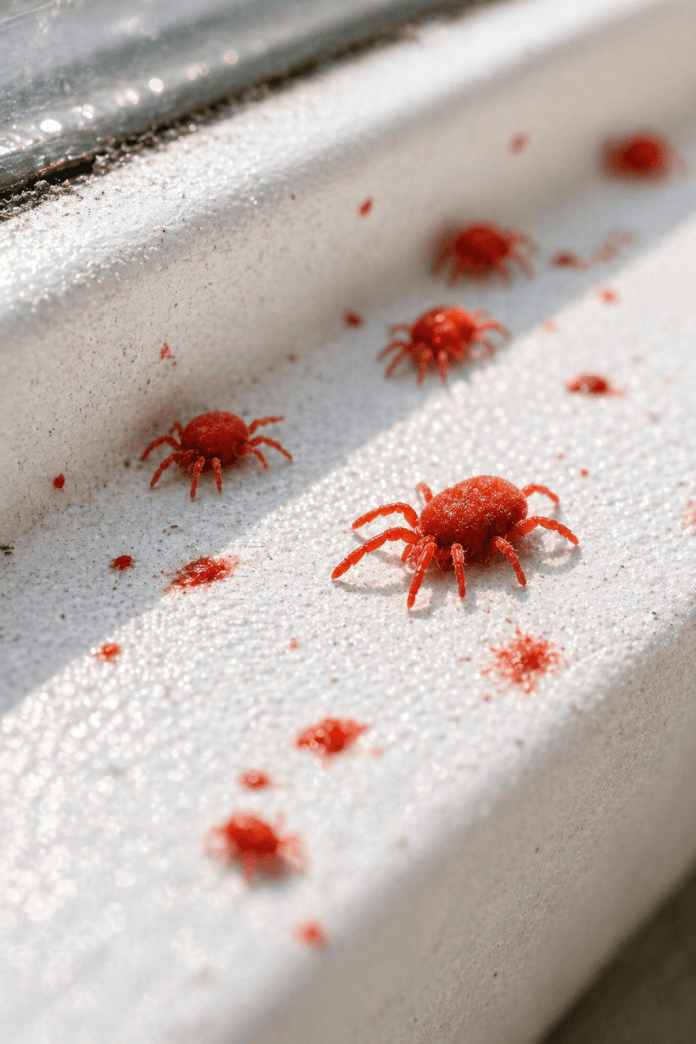

Finding tiny red specks on your windowsill can be an unsettling experience, especially when these specks seem to move on their own. At first glance, they might just appear as harmless flecks of dust, but a closer look reveals that they are very much alive. These tiny creatures, though small in size, can leave a noticeable mark both on your window ledges and in your mind.
These specks are often the result of a common household invader known as the clover mite. While they are not dangerous to humans, their sheer numbers can make them quite a nuisance. Understanding what these mites are, why they are there, and how to manage them is crucial for any homeowner looking to keep their living space comfortable and clean.
1. What Those Tiny Red Specks on Your Windowsill Actually Are
Clover mites are tiny arachnids, closely related to ticks and spiders, that measure about 0.75 millimeters or 1/30th of an inch in length. They are oval-shaped and have a reddish-brown color, which can make them appear as moving red dust to the naked eye. Their defining feature is their long front legs, which are much longer than the other six legs.
These mites are most active during the cooler parts of the year, particularly in the early spring and fall. They often invade homes in large numbers when their populations explode outdoors, seeking refuge in warm, sunny areas like windowsills. Despite their alarming appearance when squished, clover mites are not harmful to humans or pets and do not carry diseases.
2. How to Tell Clover Mites From Bed Bugs, Ticks, and Other Pests
Distinguishing clover mites from other common pests is important to ensure proper management. Unlike bed bugs, which are about 5 millimeters long and reddish-brown, clover mites are much smaller and do not bite humans. Ticks, which are also larger and can pose health risks, have a more oval body and lack the distinctive long front legs of clover mites.
Another pest that often gets mistaken for clover mites is the red spider mite, which is also tiny and red. However, spider mites typically infest plants and are less likely to be found on windowsills in large numbers. When identifying clover mites, look for their signature long front legs, which they use as sensory organs.
3. Why Clover Mites Love Sunny Windowsills and Siding
Clover mites are particularly drawn to sunny windowsills because they thrive in warm, sunny conditions. They tend to congregate on the south and west sides of buildings where sunlight is most abundant. These areas provide the warmth they need to remain active, especially during cooler months.
Additionally, clover mites are herbivores and feed on the juices of grasses and plants. If you have a lush lawn or vegetation close to your home, clover mites may find your property particularly attractive. They often migrate indoors when their outdoor food sources are depleted or when they are seeking shelter from unfavorable weather conditions.
4. Are Clover Mites Dangerous to You, Your Kids, or Pets?
Clover mites are not dangerous to humans, kids, or pets. They do not bite, sting, or transmit diseases. Their primary impact is as a nuisance pest due to their large numbers and potential to cause stains when crushed.
While they may be alarming to see in large groups, clover mites are more of an aesthetic problem than a health concern. They are generally harmless and do not pose any direct threat to the health and safety of your family or pets.
5. Will Clover Mites Damage Your Houseplants, Lawn, or Home?
Clover mites do not typically cause significant damage to houseplants or lawns. They feed on grass and plant juices, but their feeding habits are not usually extensive enough to cause noticeable harm to your plants.
However, if they invade your home in large numbers, they can leave behind red stains on walls, curtains, and furniture if crushed. While these stains are not permanent, they can be difficult to remove and may require thorough cleaning.
6. The Tell-Tale Red Smear: What It Means and What It Doesn’t
The red smear left behind when a clover mite is crushed is not blood, but rather the pigments from their bodies. This smear can be quite noticeable on lighter surfaces and is often the first clue that you have a clover mite problem.
While the red stain can be unsightly, it does not indicate any harmful substance and is not a health risk. The color comes from their body pigments, which are released when the mite is squished. The key is to avoid crushing them to prevent these stains.
7. Simple DIY Ways to Get Rid of Clover Mites Indoors
One effective way to manage clover mites indoors is to vacuum them up using a vacuum cleaner with a hose attachment. This method prevents the mites from being crushed and leaving red stains.
Sealing cracks and crevices around windows and doors can also help prevent their entry. Use weather stripping or caulk to close entry points. Additionally, removing excess vegetation and keeping grass trimmed away from the foundation of your home can reduce the number of mites that get indoors.
8. Outdoor Fixes to Stop Clover Mites Before They Invade
To prevent clover mites from entering your home, create a barrier between your home’s foundation and any vegetation. This can be achieved by maintaining a strip of gravel or mulch around the foundation.
Additionally, keep your lawn mowed and remove leaf litter, which can harbor clover mites. Applying a perimeter treatment of insecticide around the foundation of your home can also help reduce the likelihood of an indoor invasion.
9. Cleaning Hacks to Remove Red Stains Without Ruining Surfaces
If you find red stains from crushed clover mites, act quickly to clean them. Use a mixture of warm water and mild detergent to gently blot the stain from the affected surface. Avoid rubbing, as this can spread the stain.
For tougher stains, a solution of water and white vinegar can be effective. Test the cleaning solution on a small, inconspicuous area first to ensure it doesn’t damage the surface. Always use a soft cloth or sponge to avoid scratching or damaging the surface.
10. When It’s Time to Call a Pro (And What They’ll Actually Do)
If your clover mite problem persists despite DIY efforts, it may be time to call a professional pest control service. Professionals can assess the scale of the infestation and implement targeted treatments that are safe and effective.
Pest control experts may use specialized insecticides and application techniques that are not available to the general public. They can also provide advice on long-term prevention strategies to keep clover mites and other pests at bay.
11. How to Keep Clover Mites From Coming Back Next Season
Preventing future clover mite infestations involves a combination of proper landscaping and home maintenance. Ensure that there is a vegetation-free zone around your home’s foundation to deter mites from migrating indoors.
Regularly inspect and seal potential entry points like windows, doors, and vents. Additionally, maintaining a healthy lawn and garden through proper fertilization and watering can reduce the attractiveness of your property to clover mites. Implementing these strategies can help ensure that your home remains clover mite-free in the future.