

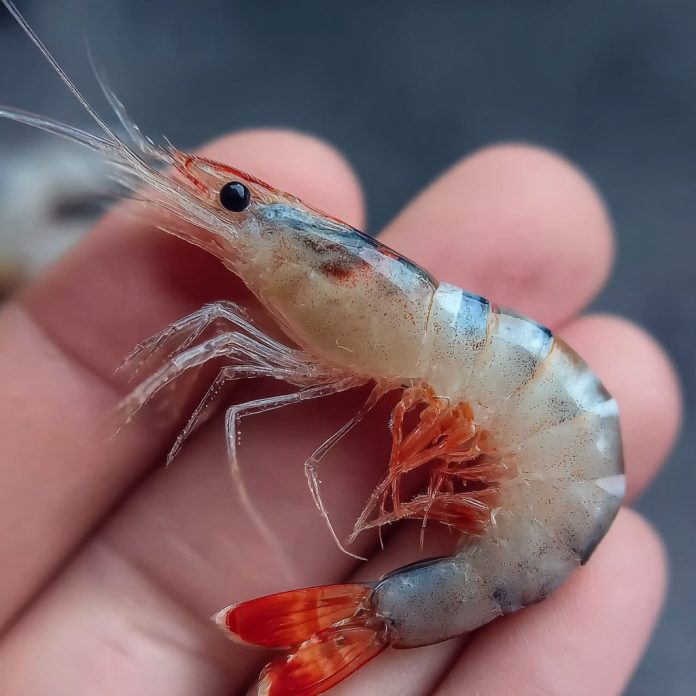

Okay, so here’s what happened.
We’re at my in-laws’. It’s one of those casual dinners — you know the type, where someone shows up with salad in a Tupperware and there’s an open bottle of wine just sitting on the counter. Nothing fancy. Just family. Comfortable. Familiar.
Then my mother-in-law brings out this shrimp dish. It smells incredible. That buttery, garlicky, shrimp-y aroma that makes your stomach literally say “yes, bring that here.”
Except… the shrimp still had their shells on.
And — here’s the thing — they weren’t deveined either.
Now look, I’m not trying to be dramatic. But that little dark line? Still there. Front and center. And in that moment, I just couldn’t. I didn’t want to eat it, and there was no way I was serving it to the kids. Cue the internal panic spiral.
Do I say something? Would that be rude? Am I just being too picky? Should I suck it up and eat it?
We smiled. We thanked her. We loaded up on other sides and made vague comments about how the kids “weren’t really feeling shrimp tonight.” Classic polite avoidance.
But on the drive home, my brain kept circling back: Is deveining shrimp actually that important? Or am I just overthinking this whole thing?
Turns out, it’s not nearly as black-and-white as I assumed.
Why This Isn’t Really About Shrimp
Let’s be real — this is one of those small things that’s kind of not that small.
Because it’s not just about how shrimp get prepared. It’s about food boundaries. Cleanliness. Culture. What each of us was raised to think of as “normal” or “acceptable” at the dinner table.
It’s also about family — and how tricky it can be to navigate food preferences without offending someone who just spent an hour cooking for you. Especially when you’re trying to raise kids with your own standards while also not coming across as That Parent.
So yeah. Shrimp. But also, definitely not just shrimp.
So What Is Deveining, and Does It Actually Matter?
Okay, quick science moment (I’ll keep it short, promise).
That “vein” running along the shrimp’s back is actually its digestive tract. Sometimes it’s clean and barely noticeable. Other times it contains grit, sand, or… well, you know.
Technically speaking, it’s safe to eat — the shrimp is cooked, any bacteria are long gone, and millions of people around the world eat shrimp this way without a second thought.
But also… I mean, ew? Not to be squeamish, but if I have the option to skip the shrimp’s last meal, I’m going to take it.
Here’s the Thing: It’s Cultural Too
This part genuinely surprised me.
In many Western kitchens, especially in the US, we’re taught that deveining is just part of the prep. It’s like shucking corn or peeling a banana. You just do it automatically.
But in lots of other cultures — including many Asian, Caribbean, and Mediterranean cooking traditions — shrimp are often served whole, shells and veins intact. Why? Because the shell adds flavor. Because that’s how it’s always been done. Because the messiness is part of the experience.
So what felt wrong or “unclean” to me might feel completely normal and delicious to someone else.
That’s humbling to realize.
So… Who’s Right?
Honestly? Nobody. Or everybody. Depends how you look at it.
Deveining isn’t mandatory. It’s optional — a choice based on texture, presentation, and what you’re used to.
Some people don’t mind the vein. Some don’t even notice it. Some will insist leaving it in makes the shrimp more flavorful. Others, like me, find it unappealing and would rather skip dinner than accidentally crunch down on sandy grit.
It all comes down to what you grew up with — and what you’re open to now.
Want to Devein Shrimp at Home? It’s Easier Than You Think
If you’re like me and prefer your shrimp vein-free, here’s how to do it without losing your mind:
What you’ll need:
- A small knife (or a fancy shrimp deveiner if you’ve got one)
- Cold water
- A good podcast or playlist to pass the time
Steps:
- Rinse your shrimp under cold water.
- Peel off the shell (unless you’re keeping it on for a specific recipe).
- Make a shallow cut along the back.
- Use the knife tip to lift out the vein.
- Give everything another rinse.
It’s not difficult, but it does take a little time — which is probably why my mother-in-law skipped it. And honestly? Fair enough.
What If You’re at Someone Else’s Table?
This is where it gets delicate.
You’re at someone’s home. They’ve cooked for you. You notice something about the dish — whether it’s the shrimp or the seasoning or the preparation — that gives you pause.
Do you speak up? Do you eat around it? Do you make an excuse and move on?
I don’t have a perfect answer. But here’s what worked for me:
I led with gratitude first. Always.
I chose silence in the moment. Because sometimes, saying nothing is more respectful than saying something.
I planned for future conversations — not to criticize, just to share. Gently. Later.
Food is personal. So is family. Navigating both? That takes grace.
Can You Adapt Shrimp Recipes Without Hurting Feelings?
Absolutely.
If you want to meet in the middle — honoring tradition while keeping your own preferences — here are some ideas:
- Use pre-deveined shrimp. No shame in the freezer aisle.
- Make two versions of the dish — one traditional, one peeled and cleaned.
- Get family involved in prep. Cooking together can smooth over a lot of differences.
- Explain your reason simply. “The texture just throws me off” goes much further than “This is gross.”
Food should bring us together, not create distance.
How Long Does Cooked Shrimp Last? (Because Leftovers Happen)
End up with shrimp leftovers? Lucky you.
Here’s how to keep them tasty:
- Store in the fridge in an airtight container — max 2–3 days.
- Reheat gently in a skillet with a splash of broth or butter. Low heat is your friend.
- Skip the microwave if you can. It’s the fastest route to rubbery disappointment.
- Or just eat them cold in a salad. Honestly, cold shrimp with lemon, arugula, and a little olive oil? Perfection.
Final Thoughts From the Shrimp Situation
So… do I still think shrimp should be deveined?
Yes. For me, personally.
But do I also understand now that there’s no single “correct” way to serve shrimp — and that my preferences are just that: mine?
Also yes.
That dinner turned out fine. My kids were happy with rice and veggies. My mother-in-law never noticed we skipped the shrimp. And I walked away with something important — about food, about culture, and about how small moments can open up bigger conversations.
If you’ve ever been in a similar spot — awkward food moment, cultural difference at the table, or just a “wait, is this normal?” kind of dinner — I’d honestly love to hear about it.
Drop a comment. Send a message. Or just take this as your reminder that food is messy. And human. And honestly, that’s kind of the whole point.