

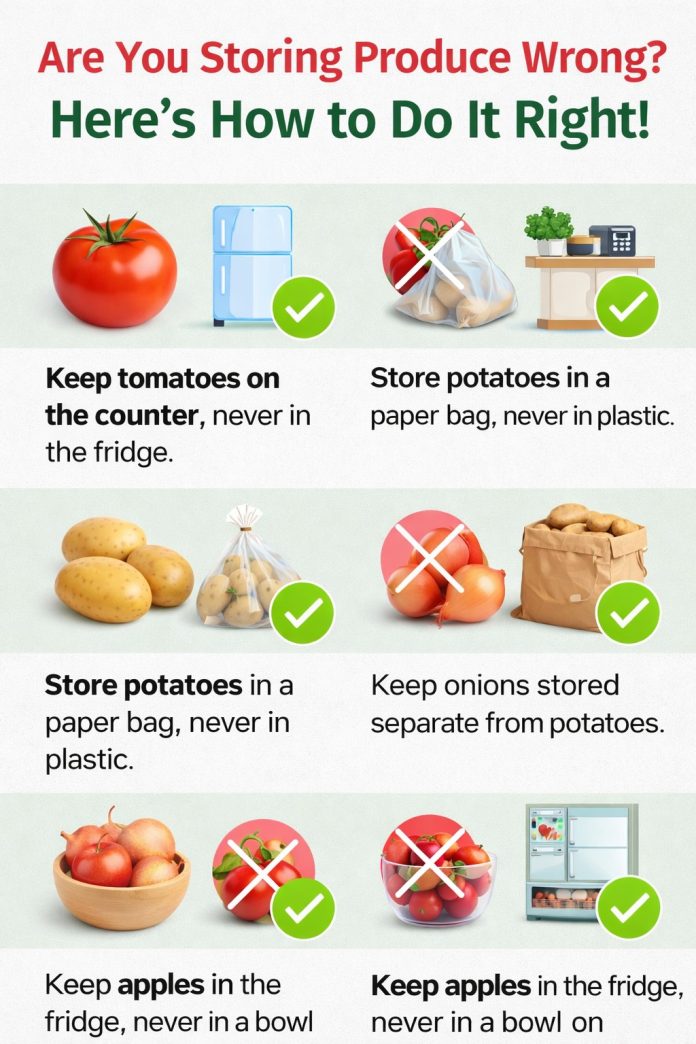

When it comes to storing fruits and vegetables, most of us are guilty of one simple mistake: tossing everything into the fridge without a second thought. It seems convenient, sure. But that one-size-fits-all approach? It’s actually shortening the life of your produce, messing with the flavor, and even zapping some of the nutritional value.
The truth is, different fruits and vegetables have different needs. They’re picky. And once you understand what they want, they’ll reward you by staying fresh way longer.
So let’s fix this. No fancy equipment needed—just a little knowledge and a few small tweaks to how you handle your grocery haul.
1. Tomatoes: Counter, Never Fridge
Tomatoes might be the most misunderstood item in your kitchen. We get it—they look like they belong in the fridge. But here’s the thing: cold temps turn tomatoes into sad, mealy versions of themselves. The flavor basically vanishes.
Instead, let them hang out on the counter. Keep them in a single layer so they don’t bruise each other. If they’re still a little underripe, place them stem-side down—it helps them ripen more evenly. Once they’re where you want them, eat them within a few days. They won’t last forever, but every bite will actually taste like something.
2. Potatoes: Paper Bags, Not Plastic
Potatoes need a cool, dark, airy spot. Light is the enemy—it turns them green and can create solanine, a compound you definitely don’t want in your dinner.
Plastic bags? Also the enemy. They trap moisture and speed up spoilage. Go with paper bags or a cardboard box instead. Aim for a spot around 45–50°F—cooler than room temp but warmer than the fridge. A pantry or basement works perfectly. And check on them now and then; one bad potato really can spoil the whole bunch.
3. Onions and Potatoes: Keep Them Apart
Here’s a mistake even experienced cooks make: storing onions and potatoes together. They’re both kitchen staples, so it seems natural to keep them in the same basket. But onions release gases and moisture that make potatoes sprout and spoil faster.
Give them separate homes. Onions like cool, dry, well-ventilated spaces too—mesh bags or baskets work great. Keeping them apart means both last longer and taste better.
4. Apples: Crisper Drawer Over Fruit Bowl
Apples are one of the few fruits that genuinely prefer the fridge. The crisper drawer gives them the humidity they crave, keeping them fresh and crunchy for weeks.
Before storing, sort through and remove any bruised or damaged ones—they’ll speed up spoilage for the rest. If you’re set on keeping apples on the counter, know this: they’ll ripen fast. A week, tops. In the fridge? You’ve got several weeks of good eating ahead.
5. Leafy Greens: Dry Them Out First
Lettuce, spinach, kale—they all wilt and get sad when stored wrong. The secret? Dry them thoroughly before they ever see the fridge.
Rinse your greens, then spin them dry in a salad spinner or pat them down with paper towels. Excess moisture is the enemy here. Once they’re dry, wrap them in a clean paper towel and stash them in a breathable container or perforated bag in the crisper drawer. That paper towel soaks up any extra moisture while letting air circulate. They’ll stay crisp for up to a week.
6. Berries: Don’t Wash Until You’re Ready
Berries are fragile little things. They bruise easily, and moisture is their downfall.
Sort through them as soon as you get home—remove any moldy or squished ones immediately. And whatever you do, don’t wash them until right before you eat them. Water speeds up mold growth like crazy.
Store them in a single layer on a paper towel-lined tray or container. The towel catches excess moisture. Some people even put another paper towel on top for good measure. Your berries will thank you.
7. Citrus: Depends on Your Timeline
Oranges, lemons, limes—they’re flexible. If you’re going to eat them within a week, the counter is fine. For longer storage, move them to the fridge.
The crisper drawer is ideal. A mesh bag works well, or just tuck them in loose. If you notice the skins starting to dry out, switch to a sealed plastic bag to lock in moisture.
8. Bananas: Let Them Ripen, Then Chill
Bananas keep ripening after you buy them—that’s just what they do. For best results, let them ripen at room temperature, preferably on a banana hook so they don’t bruise.
Once they’re as ripe as you like, you can slow things down by moving them to the fridge. Yes, the peel will turn brown. It looks weird, but the fruit inside stays good for several more days. And if they get too ripe? Peel and freeze them. Smoothies and banana bread are waiting.
9. Avocados: Paper Bag Trick for Faster Ripening
Hard avocados need time. Leave them on the counter until they yield slightly to gentle pressure. Want to speed things up? Toss them in a paper bag with an apple or banana. Those fruits release ethylene gas, which helps avocados ripen faster.
Once ripe, move them to the fridge to pause the process. If you’ve got half an avocado left, squeeze some lemon or lime juice on the cut surface and wrap it tightly in plastic. That’ll buy you another day or two before browning takes over.
10. Root Vegetables: Snip the Tops First
Carrots, beets, parsnips—they love cool, humid conditions. Before storing, cut off any leafy tops. Those greens pull moisture from the roots, making them go limp.
Pop them in a perforated plastic bag or a container with a lid and stash them in the crisper drawer. For serious long-term storage, a cool cellar or basement works wonders. Some folks pack them in sand or sawdust to keep moisture steady and prevent sprouting. Old-school? Yes. Effective? Absolutely.
11. Fresh Herbs: Treat Them Like Flowers
Most herbs do best when you treat them like a bouquet. Trim the ends, pop them in a glass of water, cover the leaves loosely with a plastic bag, and refrigerate. It’s like a mini greenhouse.
Basil is the exception. Cold turns it black, so keep it on the counter in that same water setup. Change the water every few days and pull off any sad-looking leaves. They’ll stay fresh and flavorful way longer than they would in the crisper.